Well, it’s been at least a couple of months since I last blogged. The reason being that I returned to the church for two months before going on Sabbatical Part B in early Oct. Folks have asked why I broke up my sabbatical in two parts and the main reasons are that 1) I wanted to be at the church as we transition into the fall season/start-up and 2) two of my university friends and I from many years back have had a trip to Israel planned for a long time now, one that was scheduled for this month. So in addition to taking some summer months on sabbatical, I wanted to reserve some time for it as well in the fall.
As you probably can anticipate in light of the situation Israel, with much sorrow in our hearts, that trip has now been cancelled. Our prayers certainly go to all who are suffering so greatly in this time of war, displacement and enormous grief. My friend Greg, Chad and I are also very sad after having cancelled the trip twice as a result of the pandemic, we have had to cancel the trip a third time.
Because Greg’s place of employment is paying for this trip and Greg is unable to get a refund on the airline tickets he had purchased for us, we made a split decision to pivot to a trip to Germany, with a focus on a Protestant Reformation as well as Holocaust Memorial tour. We leave for Germany later this month. We are looking forward to the trip to Germany, though it wasn’t the original plan.
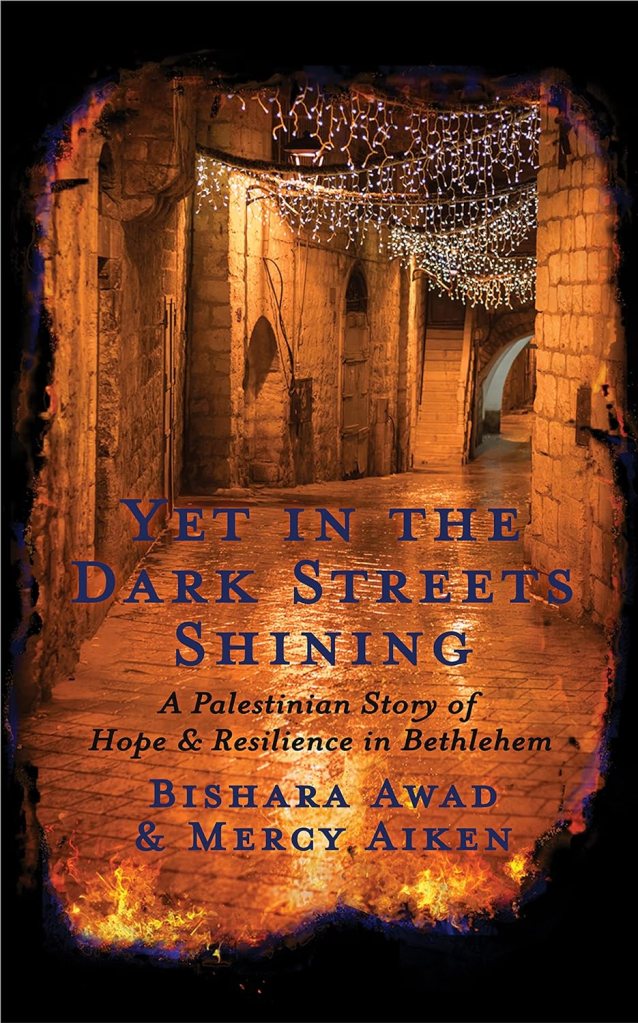
But with war exploding in Israel, my heart has been impacted deeply as I had been doing some reading on the history of displacement and suffering between the people of Israel and Palestine. In particular, I re-read a book I had read a couple of months ago called Yet in the Dark Streets Shining: A Palestinian Story of Hope & Resilience in Bethlehem. While I would like to keep folks updated on my sabbatical journeys, I would also like in the coming posts to reflect some on the history of the conflict in Israel between Israelis and Palestinians and how we as followers of Christ might think on these delicate, controversial and difficult issues. To be blunt, the church in North America has often failed to have a comprehensive and faithful understanding of God’s promises to Old Testament Israel and how those promises are now fulfilled in God’s New Israel, the Church. Because of how many North American Christians, influenced by a system of theology known as dispensationalism, have held to God’s promises still being attached to the “Holy Land” and that land being returned to the ethnic Jews as being a part of the fulfillment of Biblical prophecy, as a result, many professing Christians in our part of the world have supported militaristic intervention and reenforcement ever since 1948 when, as a result of the British Mandate, and coming off the heels of the Holocaust, Israel was officially recognized as a state. The powerful insights that come from the book displayed above is that it is written by a Palestinian Christian, Bishara Awad, who for many years was the president of Bethlehem Bible College and was also someone who lost his childhood home in Jerusalem as well as his father to an Israeli sniper, as a result of the 1948 Mandate, what Palestinians in Arabic refer to as the Nakba, i.e. “disaster, catastrophe.” So while many evangelical Christians across North America were celebrating 1948 as a fulfillment of Biblical prophecy, Awad was mourning the loss of his father and childhood home, as a result of Israel’s militaristic intervention. Awad’s book is so very insightful regarding how his family was always taught to love his fellow Jews in the name of Jesus but also that the deep traumas and divides that have existed between Jews and Arabs have often made that call to love very difficult. I hope to write more thoughts in the coming days. May we as God’s children pray for the promise of the Angel who came announcing the birth of Christ to the lowly shepherds, “Peace on earth to those upon whom His favour rests,” that His peace would cover the earth as the nations respond to His call to sacrificial love, rather than violence against one another. More thoughts soon to come.



 The Eudaimonia Blog
Leave a comment